In the dog-eat-dog universe of Blue Lock, the ego is religion. The project was constructed to make the world’s most fearsome striker, not a playmaker, not someone who would be asked to support or collaborate, but a goal-guzzling beast.
But Blue Lock 337 turns all that on its head.
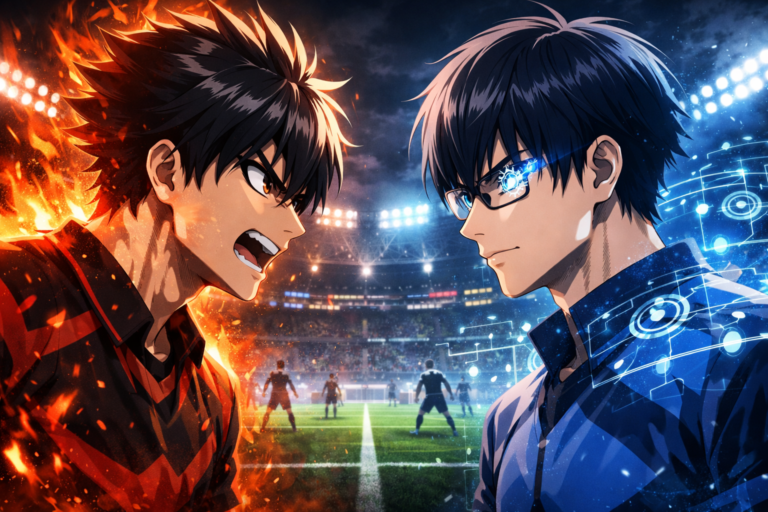
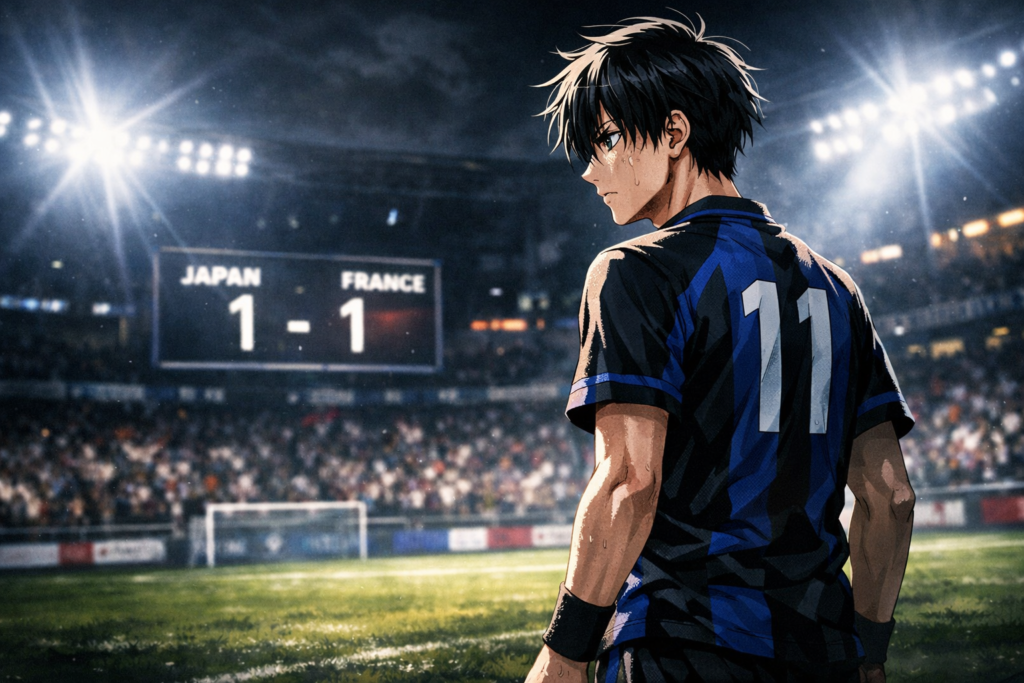
When Japan scores an unbelievable equalizer against France — a brilliant goal engineered by Hiori — the stadium erupts in jubilant celebration. Yet Yoichi Isagi stands frozen. Sure, the scoreline is 1-1 but something more fundamental has been broken: that of the philosophy of selfishness itself.
Does this mark the sunset of the “pure striker” ideal?
Karasu Support Swivel: An Earthquake in Strategy
The biggest surprise in Chapter 337 is Karasu Tabito.
When Isagi is marked tight, Karasu makes a bold move: he reinvents himself as a full-on support role. Not temporarily. Not situationally. Strategically.
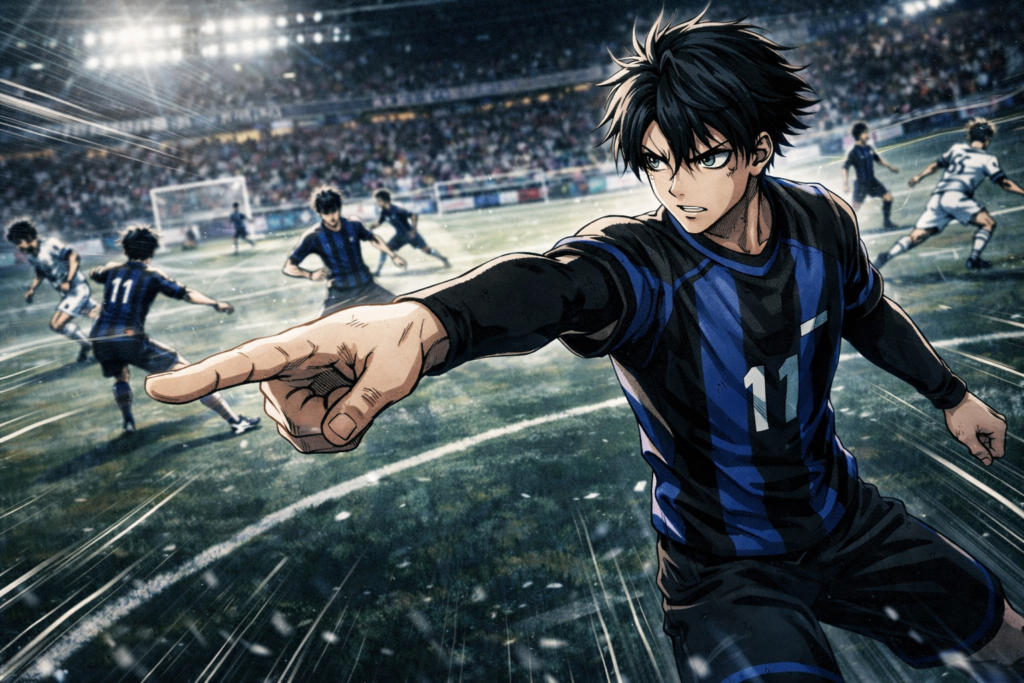
His logic is brutally practical:
Isagi cannot be the only person at the focal point.
The team must grow up quickly into a group that is more than one player.
Triumph is preferable to personal glory.
Karasu even notes that others have had to give up their striker dreams in the past — such as Gagamaru Gin, who became a goalkeeper.
So why shouldn’t Isagi adapt?
This is not just a tactical shift. It’s an ideological assault on the central tenet of Blue Lock.
The Insult That Stung: “Ordinary Player”
When an outraged Yoichi Isagi fires back, Karasu comes at him with a brutal line: “You’re not special.”
That word cuts more deeply than any defender’s tackle.
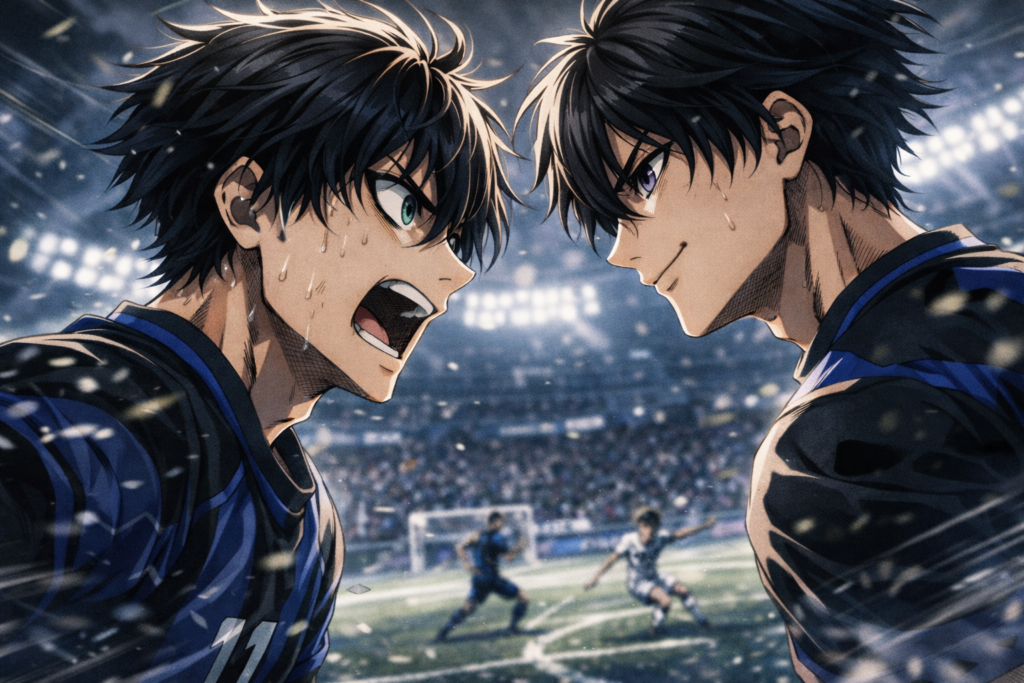
Isagi’s whole being rejects the ordinary. But doubts begin to surface internally: Was what Hiori did just a fluke? Can that “magical goal” be reproduced really against a top French defence?
This chapter is not only a spectacle of football, but also shows a battle of minds.
Isagi’s determination not to be a fan is not just obstinacy. It’s fear. The fear that once he gets pushed aside, he’ll never come out of the shadows.
Aiku’s Middle Path: Evolution, Not Surrender
Before the team combusts, Oliver Aiku intervenes as the cool-headed negotiator.
Aiku proposes a synthesis:
Adaptability + Ego
System + Individual
Strategy + Instinct
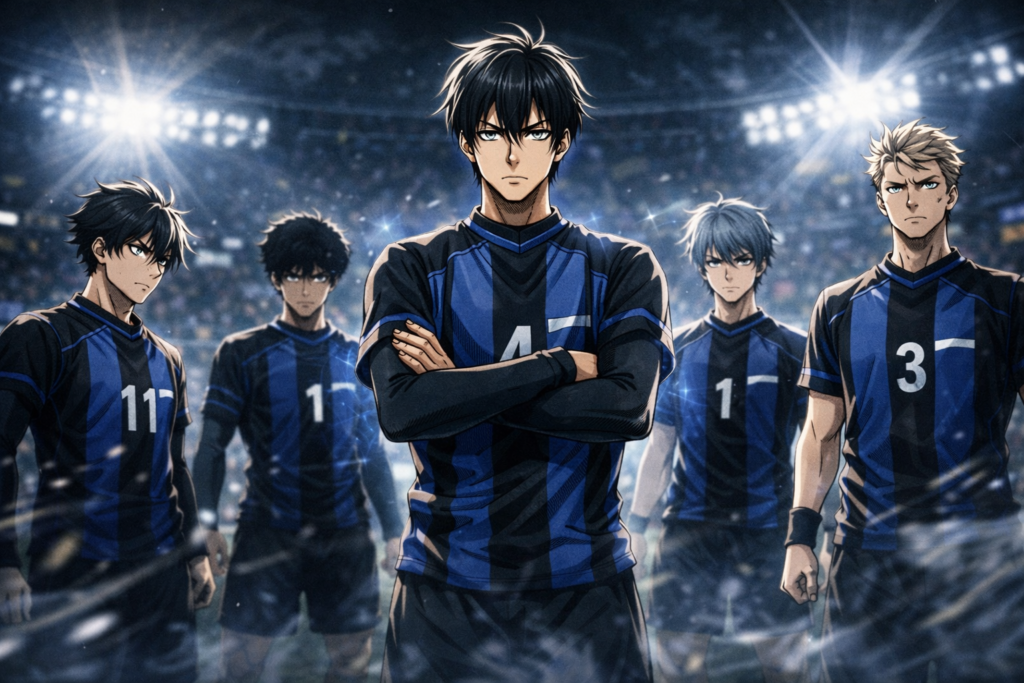
Blue Lock needs to become something smarter — not reject ego, but refine it.
But this turn has a suffocating effect. Even Charles Chevalier feels the tension. The exhilaration of pure striker ambition is giving way to an officious efficiency.
It feels… colder.
Loki vs Rin: Theory and Practice
Then there’s the reminder that philosophy is worthless if it isn’t turned into action.
Enter world-class child prodigy Julian Loki, who takes the ball — and debate becomes danger.
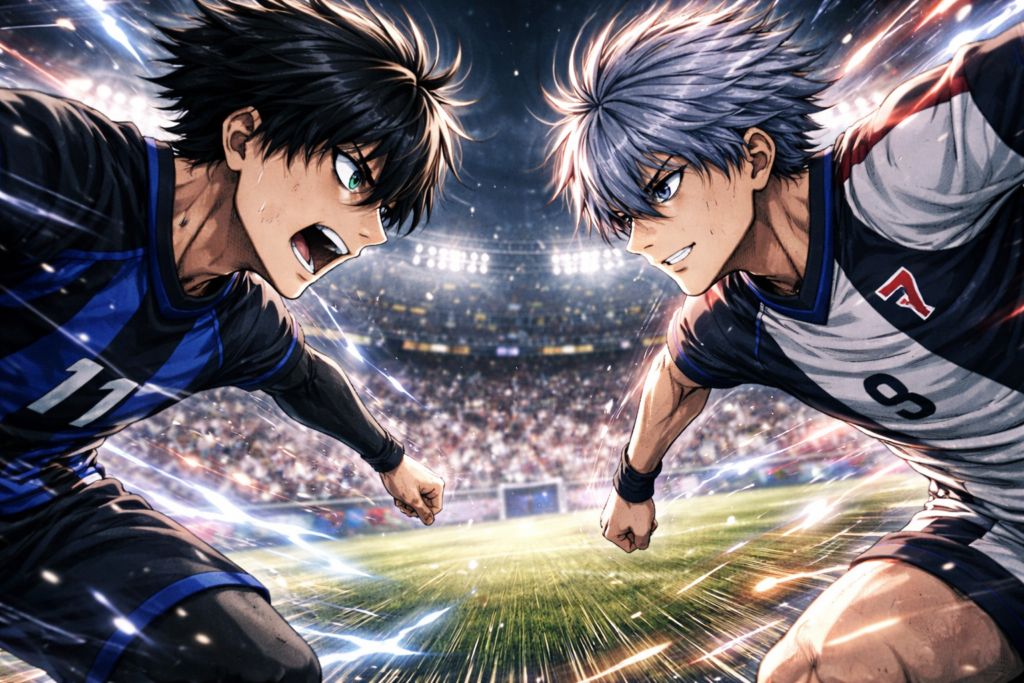
On the spot, Rin Itoshi challenges him to a high risk 1v1.
At this level, if you think twice, you lose. No matter how venal or valetudinarian: someone, whether egoist or sidekick, has to stem the tide of Daffy Monster.
Ego’s Paradox: “Pride Comes in Second”
The most surprising twist ultimately is Jinpachi Ego himself.
The man who was exhorting absolute ego droppings drops a bombshell:
“The answer is not always to be Number 1.”
“Pride is Number 2.”
It’s a paradox.
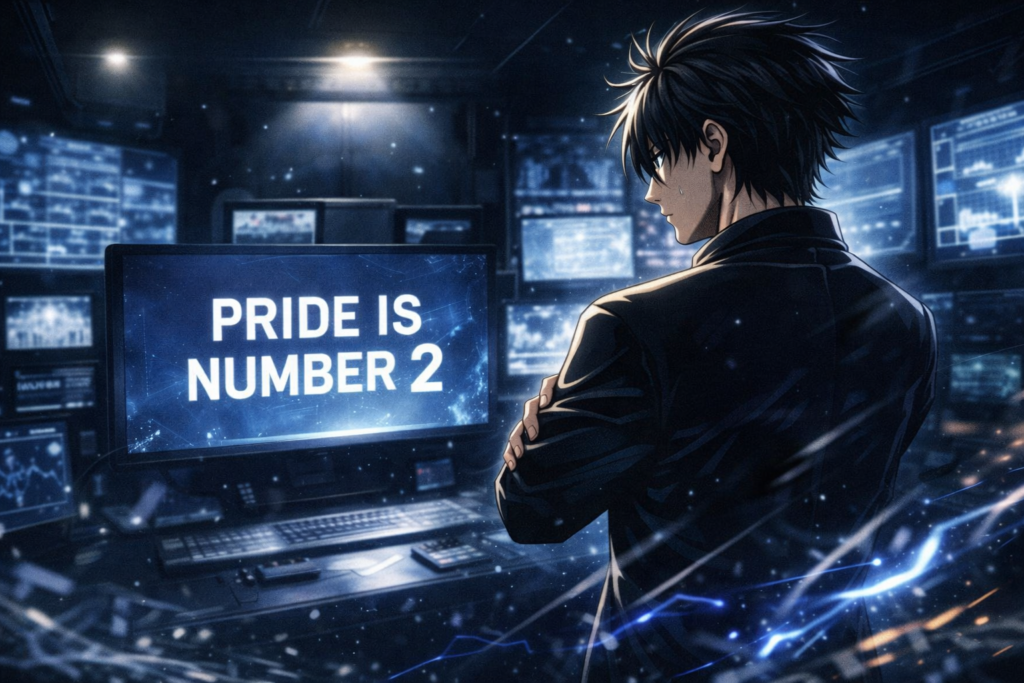
Ego would tell you that there is a higher form of egoism — that sense which knows when not to strike and when not to close, but rather strategically back off in the smaller battle so as to win the larger war.
Isagi sees this counseling as a betrayal. But perhaps it’s growth.
What “Double Joker” Could Mean
The title of Chapter 338, “Double Joker,” is a tip-off that it’s going to be all-out mayhem. Fans are guessing the re-appearance of some volatile wildcard like Sho’Ara atau Ryusei Shido (players with just brute instinct, strikers).

If they enter the field, the discussion between support roles and naked ego could blow up for good.
Conclusion: Is the Heart of Blue Lock Changing?
This is the kind of chapter 337 is, and it doesn’t just advance plot. It’s questioning the very soul of Blue Lock.
Is ego about domination?
Or is it a matter of the smartest route to victory?
Isagi is now at a crossroads:
Adapt – and risk giving up his name;
Refuse and risk becoming irrelevant
This much is clear: Blue Lock is changing and not everyone will survive that change.
FAQs
- Why Blue Lock Chapter 337 is important?
And it does so by confronting the original egoist philosophy head-on — and forcing Isagi to rethink what it means to be a striker.
- What does “Pride is Number 2” mean?
It’s a reminder that real ego may well be about strategic humility — giving support where there is and when it will help the cause and win in the end.
- Is Isagi becoming a supporter?
Not in any formal sense, but the pressure for everyone to figure out how to fit in is as fierce as it’s ever been.
- Who is that mystery “Double Joker” going to be?
Supporters clamour for the inclusion of Barou or Shido — feral strikers who would break up the taut tactical structure.
If Blue Lock questioned before, “Who will be the best striker?”
As chapter 337 poses something much more harmful:
“What does who’s the best even mean?”
Read ….. Blue Lock: Why Chapter 336 Changes Everything
About the Author